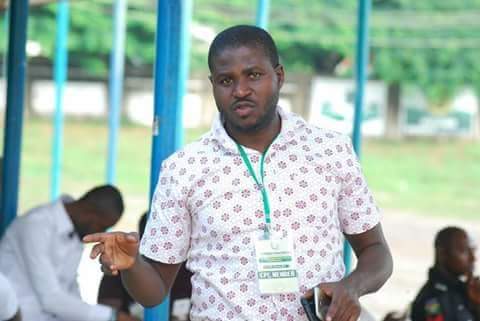
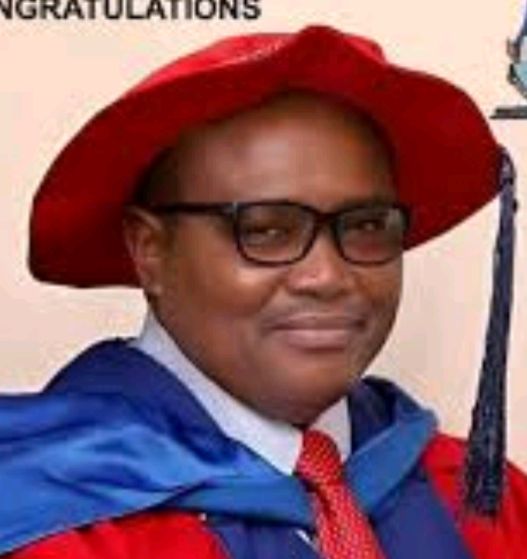

It was a bright and sunny Wednesday in the beautiful city of Calabar, a day set aside to conduct elections and hold the Quadrennial Congress of the Senior Staff Association of Nigerian Universities (SSANU), University of Calabar Branch. Quadrennial Congresses are held every four (4) years in each branch of the Union to review the performance of elected officials and elect new officers to manage the affairs of the Union for the next four years.
This important union event was scheduled to take place at UNICAL, as stated above, and the National Officers were on ground to carry out this assignment. In line with standard practice, the National President—represented by the Deputy President, Comr. Leku Ador—led a team of National Officers comprising the National Vice-President (South-South), Comr. Cheta Azuma; the National Treasurer, Comr. Sir Uchenna Nwokeji (KSJI, CNA, ACTI); and the National Trustee, Comr. Monday Izu, on a courtesy visit to the Vice-Chancellor of UNICAL, Prof. Offiong Effanga Offiong, to brief him on the purpose of their visit before proceeding with the Congress.
The courtesy call had earlier been scheduled for 10:00 a.m. However, upon arrival at the Vice-Chancellor’s office, the National Officers observed that no arrangements had been made to receive them, as neither the Vice-Chancellor nor the Deputy Vice-Chancellors were present in their offices.
After waiting for about three (3) hours, the Director of Administration in the Vice-Chancellor’s office appeared and informed the team that he had been directed by the Vice-Chancellor to receive the letter from the National Officers. The team promptly handed over the letter and was about to proceed to the venue of the Congress when the Director informed them that the Deputy Vice-Chancellor (Administration) was available and invited them to see him.
At the DVC’s office, the team was informed that the Vice-Chancellor had approved the Congress but had not approved the venue. The SSANU team responded that since approval had been granted for the Congress to hold, venue logistics would not pose a problem, as members could stand anywhere to conduct their Congress if necessary.
Surprisingly, the DVC became visibly unsettled and stated that he had received a security report indicating that disgruntled members planned to bring arms to the Congress. He insisted that the National Officers should wait for the Vice-Chancellor to arrive and give formal approval for the venue to be opened. When asked why such a serious security report had not been shared with the National Officers—who were present to conduct official union business—the DVC stated that he did not consider it necessary, yet maintained that they should continue to wait for the Vice-Chancellor.
In the course of this exchange, the DVC received a phone call from the Vice-Chancellor and stepped out to answer it. Upon returning, he requested that the National President (represented) write an “undertaking” accepting responsibility should anything go wrong during the Congress.
At this point, it became apparent that the Vice-Chancellor and his team were deliberately delaying the National Officers in an attempt to prevent the scheduled branch election—an action that amounts to unlawful and unacceptable interference in the affairs of the Union. Consequently, the SSANU team resolved to proceed to the Congress venue.
Upon arrival, members who had already gathered peacefully received the National Officers warmly and sang solidarity songs. Shortly after the introduction of the officers, as the National Vice-President (South-South) was about to address the Congress, men bearing guns and cutlasses appeared and announced that they had been directed by the Vice-Chancellor to stop the Congress.
Despite this intimidation, the Congress continued amid efforts by the armed men to disrupt it.
It is noteworthy that Prof. Offiong Effanga Offiong was appointed Vice-Chancellor of UNICAL less than three months ago. It is unfortunate that his tenure appears to have begun with actions that many consider crude, unacceptable, and capable of creating unnecessary tension and instability within the institution.