
– Harps on lost opportunities, need for turn-around.
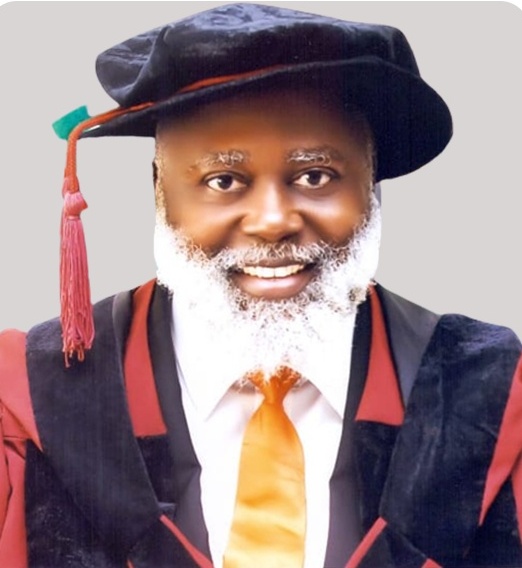
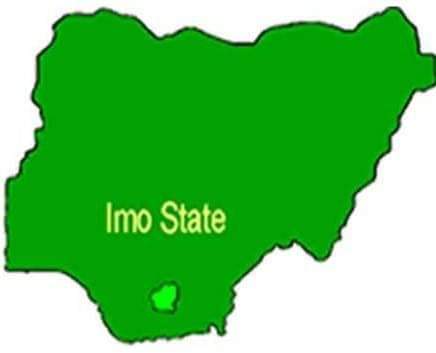
The newly appointed Chairman, People’s Democratic Party PDP, Imo state chapter, Ikenga JonJude Okere, has taken a critical look at Imo state since it was created in 1916, pointing out that the euphoria surrounding the its 50th anniversary should dwell more on honest reflection, rather than celebration.
The politician who stated this in a release he issued to commemorate Imo’s 50th anniversary, regretted that “fact that Imo is blessed with enviable human capital, cultural cohesion and intellectual pedigree, there is still a disturbing gap between potential and real performance, even after five decades of existence”. This, he said, is a result of bad and insensitive leadership. This according to him is closely linked to how power was used, misused during the military and civilian dispensations”.
According to him, the early military administrations that midwifed the state between 1976 and 1979, laid the skeletal foundation of governance based in their regimented approach to issues, which focused more on order and structure and not on developmental strides.
JonJude commended the military who, according to him, established ministries civil services routines and ensured the security of lives and property. But regrettably, governance at the time was administrative, rather than visionary. Education, healthcare, and infrastructure development were rudimentary, and citizen participation was virtually nonexistent. The military kept Imo functioning, but not progressing.
That pattern largely persisted during the prolonged return of military rule from 1984 to 1999. Administrators like Ike Nwachukwu, Allison Madueke, and Tanko Zubairu maintained stability and executed isolated infrastructure projects, particularly roads and public buildings. Yet, there was no coherent long-term ECONOMIC OR SOCIAL DEVELOPMENT FRAMEWORK. Education stagnated, healthcare systems deteriorated quietly, and public amenities were treated as maintenance burdens rather than growth catalysts. Military rule preserved the state, but it did not prepare it for competitive relevance in a democratic Nigeria.
It was the brief but incandescent civilian interlude of Chief Samuel Onunaka Mbakwe that redefined what leadership could mean in Imo State. Between 1979 and 1983, Mbakwe governed with a clarity of purpose that remains unmatched. Against severe federal constraints, he invested aggressively in education, infrastructure, and public morale. Roads were built, schools expanded, and the Imo Airport, still operational decades later, stood as a bold declaration of ambition. Mbakwe’s greatest strength lay not merely in projects but in his emotional contract with the people. He governed as one of them, for them. His weakness, perhaps, was over-personalization of vision; institutions were not sufficiently fortified to outlive his departure. Nonetheless, he set a benchmark that every successor has been judged against, and mostly found wanting.
The return to democracy in 1999 ushered in Chief Achike Udenwa, whose eight-year tenure is often underestimated. In contrast to Mbakwe’s fiery activism, Udenwa governed with restraint and institutional consciousness. His administration stabilized the civil service, improved salary and pension regularity, invested modestly in healthcare, and extended road networks into rural communities. Education did not collapse under his watch, and local governments regained some functional relevance. His major flaw was not failure, but silence. Udenwa neither marketed his achievements nor pursued transformative industrialization. Yet, in retrospect, his era appears as one of the most orderly and fiscally responsible periods in Imo’s democratic history.
Chief Ikedi Ohakim’s administration, which followed, represented a sharp stylistic shift. He entered office with big ideas and an appetite for rapid reform. Urban renewal efforts, environmental sanitation drives, and attempts at administrative modernization were notable. However, the ambition to do too much in a short time proved counterproductive. Projects lacked depth and continuity, political bridges were burned unnecessarily, and governance became confrontational. Rather than consolidating public trust, Ohakim dissipated it. His tenure illustrates a classic governance lesson: speed without sequencing leads to exhaustion, not excellence.
Rochas Okorocha’s eight years in office remain among the most controversial in Imo’s history. He rode into power on populist energy and genuine goodwill, introducing free education policies and embarking on visible infrastructure projects. However, these initiatives were poorly funded, weakly institutionalized, and ultimately unsustainable. Worse still, governance under Okorocha gradually mutated into personal rule. State institutions were subordinated to family interests, merit gave way to loyalty, and succession planning descended into brazen nepotism. Pensioners were abandoned, civil servants demoralized, and governance credibility severely eroded. What began as a populist experiment ended as a betrayal of public trust.
Emeka Ihedioha’s short-lived administration, though limited in time, left a distinct imprint. He sought to restore procedural order and civil service discipline, but his governance style was heavily centralized. Power clustered tightly around the narrow elite, and political inclusion was sacrificed for control. In a state emerging from years of institutional distortion, Imo required consensus-building and reassurance. Instead, the administration projected exclusivity. Though truncated by judicial intervention, the tenure demonstrated that even brief leadership periods can deepen divisions if empathy is absent.
Okere, illustratively looked at the subsequent administrations in the state and posted thus the current administration of Hope Uzodinma presents a simulation to urban renewal as it has been seen that some roads have been constructed, and there is greater federal alignment. There is also the urge and effort to do legacy projects as a yearn to have an indelible imprint in the hearts of ndi hoping to be adopted into the hall of legendary the Governor Sam Mbakwe who still stands alone in that category.Perhaps the consequential paradox of governance during a period of unprecedented federal allocations following the removal of fuel subsidies under the present national government is that Imo State now has access to resources never unseen in previous administrations. Yet, one would stand corrected if one assumes that the visible works on ground when measured against the scale of available funds remain underwhelming. Since the administration of the present Governor is still ongoing ndi Imo expects to see visible outcomes in education as engineered by his education reform, also healthcare revitalization, a more robust security architecture, and social welfare? Though insecurity still persists but has been critically checked mated to a noticeable measure.