
By Comrd. Okenwa Chidubem Kennedy
As the 2027 House of Representatives election approaches, the people of Orlu, Orsu, and Oru East Federal Constituency are once again presented with a choice about the kind of representation they want in Abuja
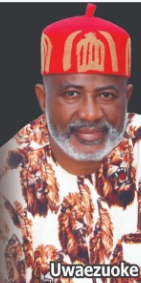
At the center of that conversation is. *Chief Stephen CY Uwaezuoke,* the *Action People’s Party (APP)* candidate for the constituency, who has positioned himself as an alternative to the existing political order.
Uwaezuoke’s argument is straightforward: after years of political representation, the people deserve an opportunity to examine what has been achieved, what remains unfinished, and what a new representative could do differently.
That argument deserves serious consideration.
A Campaign Built Around a New Direction
Uwaezuoke has consistently presented his ambition as a quest for fresh direction, inclusive representation, and people-oriented leadership.
In recent comments, he stressed that the 2027 election should not become a personal battle between himself and the incumbent. Instead, he argued that the electorate should be allowed to compare records, ideas, capacity, and programs before making its decision.
That position is important.
Democracy should never be reduced to personality contests. The central question should always be: Who can best represent the interests of the people?
Beyond Short-Term Empowerment
One of the biggest challenges facing communities across Imo State is the need to move beyond temporary political assistance towards sustainable economic opportunities.
Uwaezuoke has identified agriculture, agro-processing, health care services, employment, youth, and creating opportunities for all, among areas he intends to prioritise.
For a constituency with strong trading hubs in Orlu, farming communities in Orsu, and the commercial energy of Oru East, this is particularly relevant.
The future of Orlu, Orsu, and Oru East can not depend exclusively on occasional distributions of materials or financial assistance. Farmers need better access to markets, processing facilities, storage, financing, technology, and infrastructure.
Young people need opportunities to acquire skills and build businesses.
Women need access to productive economic opportunities.
A representative who understands that the constituency’s development must involve building systems rather than simply distributing benefits could offer a different model of representation.
Representation Must Be About the People
Uwaezuoke has also promised what he describes as inclusive and effective representation.
That means ensuring that the voice of the ordinary constituent is not lost once an election is over.
A House of Representatives member should be accessible, responsive, and capable of taking the concerns of communities to Abuja.
The job requires more than appearing at political events. It requires legislation, oversight, advocacy, and the ability to attract meaningful federal interventions.
Uwaezuoke has said his proposed agenda will cover legislation, oversight, infrastructure, electricity, healthcare, education, employment, and constituency representation.
The challenge before him is therefore clear: he must translate these promises into a detailed, measurable manifesto and convince the electorates that he has the capacity to implement them.
A Candidate With an Entrepreneurial Background
Another part of Uwaezuoke’s public narrative is his background.
He has described himself as coming from an entrepreneurial background and said that his political ambition is not driven by a desire to make politics his means of survival. He attributes his outlook to service, enterprise, and community organizing and development.
Whether that background ultimately translates into effective political leadership is in the hands of the voters.
But it raises an important possibility: representation could be approached with an emphasis on enterprise, investment, job creation, and economic opportunities, rather than politics being viewed simply as the hand-out of government resources.
The Need for Verifiable Promises
Perhaps the strongest test of Uwaezuoke’s candidacy will be his willingness to subject his own promises to the same scrutiny he applies to others.
He has argued that projects presented as achievements should be functional, measurable, and verifiable.
That should become a standard for the entire 2027 campaign.
If elected, Uwaezuoke should be prepared to publish his constituency development agenda, identify specific targets, and periodically report to the people on what has been achieved.
The people deserve nothing less.
2027 and the Choice Before Orlu, Orsu, and Oru East
The significance of Uwaezuoke’s candidacy is, therefore, not merely that he is challenging an incumbent.
It is that he is offering the electorate another opportunity to examine the meaning of representation.
His supporters see him as a candidate capable of bringing fresh energy, stronger engagement, and a more inclusive approach to the constituency. His own campaign has emphasized people-focused legislation, development projects, and improved welfare for constituents.
Those promises now need to be tested against the realities and expectations of Orlu, Orsu, and Oru East.
Politics should be about service, not permanent ownership of political offices, and personal commitment argarandizement.
An incumbent has the right to seek another mandate. A challenger has the right to present a different vision. And the people have the right to decide which vision they believe will serve them better.
Chief Stephen CY Uwaezuoke of the *Action People’s Party (APP)* has placed himself before the electorates, as an alternative and has promised to take his campaign and manifesto directly to the communities, ward by ward.
His candidacy therefore deserves to be judged not merely by political affiliations, endorsements, or campaign rhetoric, but by the substance of the future he proposes.
For Orlu, Orsu, and Oru East, 2027 presents an opportunity for a serious conversation about leadership, accountability, development, and the future.
And if Uwaezuoke can demonstrate that his promise of fresh direction, inclusive representation, and people-centred development is more than a campaign slogan, he will have given the electorates a compelling alternative to consider.