

…Describes action as ill-conceived,unlawful
Human rights lawyer and justice advocate, Barr. Ephraim Okafor, has faulted Governor of Imo State, Hope Uzodimma, for handing over TESAC land to Bishop of Orlu Diocese, Bishop Ukuoma without duly getting consent from the ancestral owners of the disputed land, regretting that such action was legally unacceptable.
In a statement tagged “Legal Opinion On The Status Of The Disputed Orlu Community Land And The Bishop’s Refusal To Grant Audience Pending Litigation”, the lawyer said the action of the governor was uncalled for, ill-conceived and hieght of sychophancy.
“Orlu Community, acting through its customary authorities and families who are the original owners, granted several hectares of land to the Catholic Church strictly for educational purposes under customary tenure, subject to periodic payments (rent/tribute) to the community.
“The Government subsequently recovered/acquired the land from the Catholic Church and established public educational institutions thereon, namely:A branch of Alvan Ikoku College of Education, and laterA branch of Imo State Polytechnic.
“The Polytechnic was later relocated by the Governor to his hometown, after which the Government returned the land to the Bishop of Orlu Diocese, without the consent, consultation, or concurrence of the Orlu Community and the original land-owning families.The original owners instituted court proceedings against both the Catholic Church and the Government, contending that:The land was given for a limited purpose.
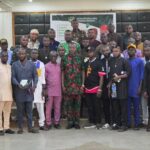
“That purpose has failed. Any reversion ought to be in favour of the original owners, not the Church.In response to growing community agitation, the Orlu Community resolved to peacefully reclaim the land and appointed a 9-man committee to approach the Igwe of Orlu and the Catholic Bishop of Orlu to communicate the community’s position.
“The Bishop, through the Diocesan Chancellor, declined audience, stating that the matter is sub judice and that no engagement can take place unless:The suit is withdrawn; orLeave/consent of court is first sought and obtained.
“This opinion addresses the legal correctness of that position and the rights and options open to the community.
“ISSUES FOR DETERMINATION. What is the legal nature of the original grant of land to the Catholic Church?What is the effect of the Government’s acquisition and subsequent “return” of the land to the Church?Whether the land ought to revert to the original owners upon failure of the educational purpose.Whether the Bishop is legally justified in refusing audience on the ground that the matter is in court.
“Whether the community may lawfully take steps to reclaim the land outside the court process. LEGAL ANALYSISISSUE. Nature of the Grant to the Catholic Church”, he pointed out.
“Under Nigerian customary land law, land granted by a community for a specific purpose (e.g. education, worship, health) does not confer absolute ownership, but rather a customary tenancy or determinable interest.The Supreme Court has consistently held that where land is granted for a particular purpose, once that purpose ceases, the land reverts to the grantors.
“Authorities include: Abioye v. Yakubu (1991) 5 NWLR (Pt.190) 130Oke v. Atoloye (1986) 1 NWLR (Pt.15) 241Amakor v. Obiefuna (1974) 3 SC 67The payment of tribute or rent by the Church reinforces the conclusion that ownership never passed absolutely.ISSUE 2: Effect of Government Acquisition and Return to the ChurchEven where Government lawfully acquires land for public purposes, such acquisition is held in trust for that purpose alone.Where:
“The public purpose fails, orThe acquired land is no longer needed,the law is settled that the land ought to revert to the original owners, not to a prior occupier or beneficiary.See:Osho v. Foreign Finance Corporation (1991) 4 NWLR (Pt.184) 157Ajibulu v. Lawson (1956) SCNLR 33The Government therefore lacked legal authority to “return” the land to the Catholic Church, which itself was only a beneficiary of a limited grant.Such an act is ultra vires, unconstitutional, and liable to be set aside by the court.
“Reversionary Rights of the Original Owners Upon: Cessation of the educational use, andRelocation of the Polytechnic,the reversionary interest crystallised in favour of:Orlu Community, andThe original land-owning families.
“The pending suit is therefore legally well-founded and the claim that the land should revert to the original owners accords with established Nigerian land jurisprudence.
“Legality of the Bishop’s Refusal to Grant Audience. The doctrine of sub judice prohibits: Parties from taking steps that prejudice the court’s authority, orEngaging in actions capable of influencing the outcome of pending litigation.
“However, Nigerian courts have clarified that:Peaceful dialogue, community engagement, and settlement discussions do not amount to contempt, provided they do not undermine the court.The Bishop’s insistence that: The case must first be withdrawn, orCourt consent must be obtained, is legally cautious but not strictly mandatory.
“That said, given: The sensitivity of the dispute, The risk of misinterpretation, the stature of the parties involved,the Bishop’s position is defensible as a prudential step, even though not an absolute legal requirement”, he butressed.
On Self-Help and Community Repossession, the lawyer strongly advised the community against any form of self-help, forceful entry, or physical reclamation of the land while the matter is pending in court.
“Nigerian law frowns heavily on self-help: Ojukwu v. Military Governor of Lagos State (1986) 1 NWLR (Pt.18) 62. Any such action may expose the community and its leaders to:Contempt proceedings, Criminal liability, Injunctions and damages.
“The land granted to the Catholic Church was conditional and purpose-specific, not absolute.The Government’s act of returning the land to the Bishop without the consent of the original owners is legally unsustainable.
“Upon failure of the educational purpose, the land ought to revert to Orlu Community and the original families.
“The Bishop’s refusal to grant audience pending litigation is prudentially justifiable, though not strictly compelled by law. Any attempt by the community to physically reclaim the land outside the court process is illegal and ill-advised.
“RECOMMENDATIONS: The community should:
Allow the court process to run its full course; orFormally explore court-sanctioned settlement/ADR.If dialogue is desired:
“An application may be brought before the court informing it of ongoing settlement efforts. All communications should be: Documented, Civil, Routed through counsel”, he emphasized.