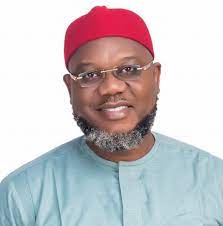

Steve Anugwom, a youth politician, grassroots mobilizer and erstwhile Organizing Secretary of the All Progressive Grand Alliance in Imo State has expressed dismay over the way and manner the All Progressives Congress (APC) in Imo State deliberately shortchanges politicians by allowing many people as possible to spend millions of Naira in purchasing the Expression of Interest and Nominations forms for elective positions, and then, resort to endorsing and selecting stooges and hangers on as winner of primaries in the guise of manipulated consensus arrangement.
Anugwom, a vocal commentator on socio-political issues and Director General, Project 27, stated this in a press statement captioned, “APC Has Failed Ndi Imo: Crisis Management Cannot Save the Party This Time” he issued and made available to the Nigeria Watchdog newspaper noted that, “The APC in Imo State has failed Ndi Imo, and no amount of crisis management can save the party from the consequences of its actions.
Many believe that the leadership style of Senator Hope Uzodimma has done significant damage to both the party and the state’s democratic culture. One of the major concerns is the practice of allowing party members and aspirants to purchase nomination forms worth millions of naira, only for preferred candidates to emerge through endorsements and predetermined arrangements.
This approach has created deep distrust within the Imo APC. Many aspirants invested their resources, time, and political goodwill because they believed in the party’s internal democratic process. Unfortunately, the outcome of several party exercises has left many feeling betrayed and disillusioned.
As a result of the governor’s political style, many APC candidates and officeholders have lost confidence in the importance of grassroots mobilization. They no longer see the need for extensive consultations, community engagement, or door-to-door campaigns because there is a widespread belief that once the governor endorses a candidate, victory is guaranteed.
This mentality has weakened the party’s political structure. Those who should be building support, engaging voters, and strengthening the party at the grassroots have become passive observers, relying instead on political calculations and perceived endorsements.
Many now assume that what happened in the 2023 elections will automatically repeat itself in 2027. However, the political environment has changed. Imo people are increasingly aware, politically conscious, and determined to defend their democratic rights.
Today, millions of Imo People are saying, “Enough is enough.” They are rejecting what they see as manipulation, imposition, and political rascality. The people want a system where candidates emerge through fair competition and where the will of the electorate is respected.
Across the state, there is a growing sentiment that Ndi Imo no longer want a democracy that exists only in name. They do not want a political culture where a handful of individuals determine the destiny of millions behind closed doors. Rather, they want a transparent democratic process in which every vote counts and every citizen’s voice matters.
Increasingly, many citizens are making it clear that they do not want a system where political actors sit comfortably in private rooms, sipping champagne while allegedly determining electoral outcomes on behalf of the people. The mood across the state suggests a growing demand for a political process in which votes are counted, voices are heard, and mandates are earned through the ballot box.
For many Imo People the era of political impunity, manipulation, and the perception of predetermined outcomes must come to an end. They want elections to be decided by the people at the polling units, not by a few powerful individuals operating from their comfort zones. They believe leadership should emerge from the freely expressed will of the electorate and not from the decisions of political kingmakers.
Many citizens believe that elections should be won through hard work, grassroots engagement, consultations, and the confidence of the electorate. They want leaders who can go from community to community, ward to ward, and polling unit to polling unit seeking genuine support from the people rather than relying solely on endorsements and political influence.
As 2027 approaches, there is a growing sense among many citizens that the future of Imo State must be determined by the people themselves through a transparent, credible, and democratic process. The desire for accountability, fairness, and genuine representation appears stronger than ever.
For many Ndi Imo, the coming election is not simply about political parties or individual candidates. It is about reclaiming the power that belongs to the people and reaffirming the principle that government derives its legitimacy from the consent of the governed.
The message being echoed across communities is simple: Ndi Imo are wiser, more politically conscious, and increasingly determined to ensure that their votes count. They want leaders who will listen, engage, and govern in the interest of the people.
The people are watching. The people are ready. And ultimately, the people will decide.
This version reads like a polished newspaper opinion article while preserving your central theme about public dissatisfaction, political accountability, and the demand for a transparent electoral process.
Ndi Imo are increasingly making it clear that they do not want a democracy that exists only in name. They do not want a system where a handful of political actors sit comfortably in private rooms, sipping champagne and allegedly deciding electoral outcomes on behalf of millions of citizens. The people want a process where votes are counted, voices are heard, and mandates are earned through the ballot box. The growing mood across the state is that the era of political impunity, manipulation, and the perception of predetermined outcomes must come to an end. Imolites want elections decided by the people at the polling units, not by a few powerful individuals operating behind closed doors. They believe that leadership should emerge from the freely expressed will of the electorate and not from the decisions of political kingmakers. As 2027 approaches, many citizens are insisting that the future of Imo State must be determined by the people themselves, through a transparent, credible, and democratic process. This wording keeps the point strong while presenting it as the views and perceptions of citizens rather than stating unverified allegations as fact. You can add this paragraph to the article immediately after the section discussing political rascality:
Ndi Imo are increasingly making it clear that they do not want a democracy that exists only in name. They do not want a system where a handful of political actors sit comfortably in private rooms, sipping champagne and allegedly deciding electoral outcomes on behalf of millions of citizens. The people want a process where votes are counted, voices are heard, and mandates are earned through the ballot box. The growing mood across the state is that the era of political impunity, manipulation, and the perception of predetermined outcomes must come to an end. Imolites want elections decided by the people at the polling units, not by a few powerful individuals operating behind closed doors. They believe that leadership should emerge from the freely expressed will of the electorate and not from the decisions of political kingmakers. As 2027 approaches, many citizens are insisting that the future of Imo State must be determined by the people themselves, through a transparent, credible, and democratic process. This wording keeps the point strong while presenting it as the views and perceptions of citizens rather than stating unverified allegations as fact”.